
Blog
Welcome to our new “Blog” page. It’s something we’ve been talking about for a while, and now here it is! We will post things of interest; new products as they come along, reminders of the benefits of having a central vacuum in your home, handy hints to keep it operating smoothly, and more.
A reminder that all our vacuum systems and accessories are sourced from Italy and Germany, hence our name European Central Vacuum Systems. The brands we sell are; from Italy TUBÒ residential systems, AIRÒ PROFESSIONAL commercial systems and coming soon, a new range, AER-HYBRID residential systems. And from Germany, the BVC range of residential systems. “Experience European Excellence”.
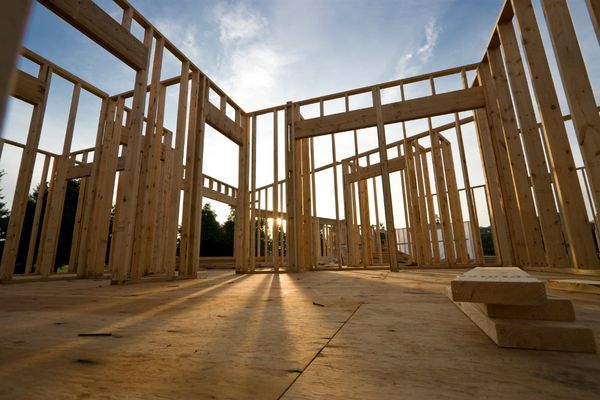
Building a Spec Home? Small Details Can Give Future Buyers More Choice
When you're building a spec home, you're making hundreds of decisions for someone you probably haven't met yet.
You don't know whether they'll have young children or teenagers. You don't know whether they'll have pets, work from home, love entertaining, or spend their weekends trying to avoid housework altogether.
And you certainly don't know which features they'll consider essential and which ones they'll barely notice.
That's one of the challenges of building a home for the open market. You need to create something that appeals to a wide range of buyers, while keeping a very close eye on the build budget.
So how do you add flexibility without loading a spec home with expensive features the eventual owner may not want?
Sometimes it's less about installing everything now and more about making smart provision for what could be added later.
Central vacuum ducting is a good example.
Building for a Buyer You Haven't Met Yet
Future-proofing isn't a new concept in residential construction.
Builders and developers routinely make provision for technology and services that may be useful later. Data cabling, additional electrical capacity, security, EV charging and other infrastructure can all be easier to accommodate while a home is under construction.
Central vacuum ducting works on much the same principle.
A central vacuum system uses pipework installed within the structure of the home, connecting strategically positioned inlet points back to a central power unit.
The easiest time to install that pipework is while the house is being built and the relevant areas are accessible.
But here's the important part for a spec home:
You don't necessarily need to install the vacuum system itself.
The ducting and inlet points can be installed during construction, giving the eventual homeowner the option of adding a European Central Vacuum System later.
They may install one immediately. They may decide to add it five years from now.
Or they may never use it.
As the developer, you're not making that decision for them. You're simply making sure the decision remains available.
Thoughtful Specification Doesn't Have to Mean Expensive Extras
When people talk about differentiating a new build, attention often goes to the obvious features: kitchens, bathrooms, flooring, appliances and landscaping.
Those things matter, of course.
But there is another category of features that buyers may not immediately see: the decisions made during construction that affect what they can easily do with the property later.
That's where infrastructure becomes interesting.
If something is relatively straightforward to incorporate during construction but considerably more complicated once the house is finished, there is an argument for at least considering it at the planning stage.
Central vacuum ducting falls squarely into that category.
Retrofitting central vacuum systems into existing homes is possible in many cases, but what can be achieved depends heavily on the construction and layout of the property.
In a new build, we can work from the plans and design the ducting around the house before those access points disappear behind finished walls and ceilings.
What Does Central Vacuum Ducting Actually Cost?
Of course, every additional feature has to justify its place in the budget.
Let's use the same example Tony recently discussed on LinkedIn: a 175m² home with five central vacuum inlet points.
An indicative cost for installing the ducting is approximately $1,926.25 including GST.*
Almost $2,000 is still almost $2,000. We're certainly not suggesting developers should stop scrutinising additional costs.
But it's worth putting that figure into the context of the complete build.
For a standard or budget build costing approximately $437,500–$560,000, the ducting represents around 0.34%–0.44% of the total build cost.
For a mid-range home at approximately $560,000–$787,500, it represents approximately 0.24%–0.34%.
And on an architectural or custom home costing approximately $787,500–$1,050,000+, it represents approximately 0.18%–0.24%.
Tony will be the first to admit he's biased, but when you look at it in the context of an entire build, it's a relatively small provision for something that could be considerably more complicated for the homeowner to add later.
*Pricing is indicative and will depend on the design and requirements of the individual property. Contact us for current project pricing.
Could It Help a Spec Home Stand Out?
We wouldn't claim that central vacuum ducting is going to sell a house on its own.
It won't.
Nor would we suggest that installing it automatically adds a particular dollar value to a property. Too many factors influence property values for us to make that claim.
But when buyers are comparing similar homes, it's often the combination of details that creates the overall impression.
Knowing that a home has already been prepared for a central vacuum system is another feature a salesperson or developer can point to.
For a buyer who has previously lived with a central vacuum system, it could be particularly appealing.
For someone unfamiliar with central vacuums, it becomes another example of the thought that has gone into the home: the infrastructure is there, and the choice is theirs.
That's quite different from discovering several years later that something they would like to install may require considerably more work because provision wasn't made during construction.
It Doesn't Mean Filling the House With Vacuum Inlets
Good central vacuum design isn't about putting an inlet in every room.
Quite the opposite.
Our approach at European Central Vacuum Solutions is as many as necessary and as few as possible.
The number and placement of inlet points depend on the floor plan and the reach of the vacuum hose. A well-designed system should provide practical coverage throughout the home without unnecessary outlets.
For a five-inlet installation, for example, we can review the plans and determine positions that provide the most useful coverage.
It's also worth considering the garage. An appropriately positioned inlet can make it much easier for the eventual homeowner to vacuum vehicles as well as the house.
Planning all of this during construction means the pipework can be incorporated neatly into the structure and concealed when the home is finished.
Not Just for Architectural Homes
Central vacuum systems are sometimes associated with large or high-end houses.
But when we're talking specifically about pre-installing the ducting, the argument isn't really about luxury.
It's about infrastructure. If a feature is significantly easier to incorporate while a house is being built than after it has been completed, it's worth asking whether making provision for it now makes sense.
That applies whether you're constructing a high-end architectural property or a well-designed mid-range spec home.
The eventual owner can decide whether they want to take advantage of it.
Building a home for yourself? Read our guide to why installing central vacuum ducting during construction can help future-proof your new build.
A Different Way to Think About Future-Proofing
A spec home is ultimately being designed around assumptions.
You can research your target market. You can look at what's selling. You can understand what buyers generally expect from homes within a particular price bracket.
But you can't know exactly what the person who eventually buys the house will want five, ten or twenty years from now.
Future-proofing doesn't mean trying to predict all of those things.
Sometimes it simply means making sensible decisions during construction that leave more options open.
Central vacuum ducting is one of those decisions.
You don't need to install the complete system. You don't need to choose the power unit for the future homeowner. And you don't need to assume they'll even want one.
You're simply giving them the opportunity.
And when you're already building the house, that opportunity is considerably easier to provide.
Planning a Spec Home or Development?
If you're a builder or property developer planning an upcoming project, talk to Tony before the walls are closed.
European Central Vacuum Solutions can review your plans, recommend the appropriate number and position of inlet points, and advise on installing the ducting during construction.
The home can then be ready for a European Central Vacuum System whenever, or if, its future owner decides they want one.
FAQ
Can I install central vacuum ducting without installing the vacuum system?
Yes. The ducting and inlet points can be installed during construction without installing the central vacuum power unit. The future homeowner can then choose whether and when they want to complete the system.
When should central vacuum ducting be installed in a new build?
Ideally, it should be planned while the home is under construction and before the relevant walls and ceilings are closed. This allows the pipework and inlet locations to be incorporated into the building while access is straightforward.
How many central vacuum inlets does a spec home need?
There isn't a fixed number. It depends on the size and layout of the property and the reach of the vacuum hose. European Central Vacuum Solutions works on the principle of installing as many inlet points as necessary and as few as possible.
Does installing central vacuum ducting increase a home's value?
We wouldn't claim that ducting alone increases the monetary value of a property. It does, however, provide additional infrastructure and gives the future homeowner the option of installing a complete central vacuum system without starting from scratch.
Can central vacuum ducting be installed in standard spec homes?
Yes. It's not limited to architectural or luxury homes. Whether it's worthwhile depends on the individual project, budget and target market, but the ducting can be incorporated into standard and mid-range new builds as well as high-end properties.

Get in touch
Address
19 Fitzherbert St., Alicetown, Lower Hutt, 5010
Email Address
Phone Number

Copyright © 2024 Euro Vacuum System | Website Design by Virtual Innovation