
Blog
Welcome to our new “Blog” page. It’s something we’ve been talking about for a while, and now here it is! We will post things of interest; new products as they come along, reminders of the benefits of having a central vacuum in your home, handy hints to keep it operating smoothly, and more.
A reminder that all our vacuum systems and accessories are sourced from Italy and Germany, hence our name European Central Vacuum Systems. The brands we sell are; from Italy TUBÒ residential systems, AIRÒ PROFESSIONAL commercial systems and coming soon, a new range, AER-HYBRID residential systems. And from Germany, the BVC range of residential systems. “Experience European Excellence”.
Can You Install a Central Vacuum System Yourself? A Guide for NZ Homeowners
Building a new home comes with plenty of decisions, and plenty of costs. If you're comfortable taking on some of the practical work yourself, you might already be looking at ways to manage your budget without compromising on the features you want in your finished home.
But have you ever considered installing your own central vacuum system?
It's probably not something most homeowners immediately think of as a DIY project. However, with the right equipment, careful planning and an understanding of which work requires a qualified tradesperson, installing the ducting and inlet components of a central vacuum system may be something you can take on yourself.
At European Central Vacuum Systems, we can supply a complete DIY package, including the ducting, power unit, hose and cleaning accessories. We can also help you plan suitable inlet locations using your house plans, so you're not left to work everything out on your own.
What Is a DIY Central Vacuum System?
A central vacuum system is a built-in cleaning system that uses ducting throughout the home to connect wall inlets to a centrally located power unit.
Rather than moving a conventional vacuum cleaner from room to room, you connect the vacuum hose to an inlet and use the central system to clean your home.
With a DIY installation, you take responsibility for installing the ducting and inlet components, following the manufacturer's instructions and coordinating with your builder where necessary.
You don't have to design the system entirely by yourself, though. If you send us your house plans, we can advise on suitable inlet locations based on the footprint of your home.
The idea is to give homeowners who are confident undertaking practical DIY work another option when planning their new build.
What's Included in the DIY Central Vacuum Kit?
Our DIY package is priced at $2,450 and includes the main components needed for a five-inlet central vacuum system.
DIY central vacuum package
$2,450
*Excludes GST and Freight
Included in the package:
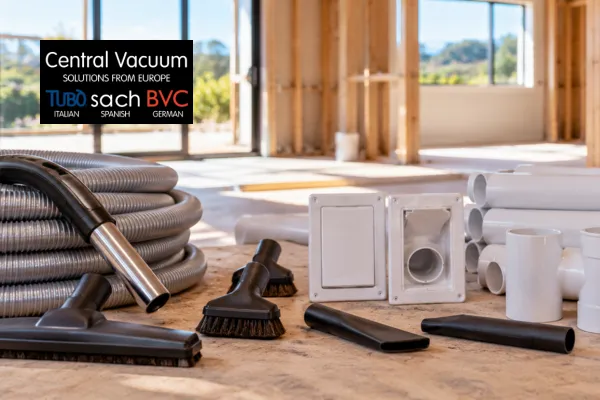
Ducting kit for five inlet points
TUBÒ Classic TC3 power unit
Professional Cleaning Kit
7-metre flexible vacuum hose
The package doesn't include the tools needed for installation, so you'll need to have access to suitable equipment. Additional central vacuum accessories are also available separately if you'd like to customise your system.
Planning Your Central Vacuum Installation
Good planning is one of the most important parts of installing a central vacuum system, particularly when you're building a new home.
Before installing any ducting, you'll need to consider where the vacuum inlets will go, how the pipework will run through the house and where the power unit will be located.
It's important that the hose can reach the areas you need to clean, including room corners, around furniture and any stairs.
That's where we can help. Send Tony your house plans, and he can advise on suitable inlet locations based on the footprint of your home.
You'll also need to coordinate the proposed ducting routes with your builder before the wall linings are installed. Any work involving structural framing or other building services must be checked with the appropriate professionals.
How Does the DIY Installation Work?
Although the exact installation will depend on your home and the kit supplied, the process generally involves several stages.
1. Plan the ducting and inlet locations
Start by reviewing the house plans and deciding where the inlets and power unit will be positioned. The aim is to provide practical coverage throughout the home while keeping the ducting routes as straightforward as possible.
2. Install the inlet mounting plates
The inlet mounting plates are positioned and secured before the walls are lined. These will eventually accommodate the finished vacuum inlet valves.
The low-voltage control cable is also installed according to the manufacturer's wiring instructions.
3. Install the ducting
The ducting is cut, fitted and connected to form the network between the inlet locations and the power unit.
It's important to follow the manufacturer's instructions for cutting, joining and supporting the pipework. Keeping the inside of the ducting clean and protecting open ends during construction helps prevent problems when the system is first used.
4. Install the power unit
Once the relevant building work and finishes are complete, the power unit can be mounted in its designated location and connected according to the manufacturer's instructions.
The unit needs suitable ventilation, access for maintenance and the appropriate electrical supply.
5. Fit the inlet valves and test the system
Once installation is complete, the finished inlet valves are fitted and the system is tested.
This includes checking that the vacuum operates from each inlet, that the connections are secure and that suction is satisfactory throughout the system.
The supplied installation guide covers these stages in greater technical detail, but the manufacturer's instructions should always be followed for the specific equipment being installed.
What About the Electrical Work?
While the ducting and inlet installation may be suitable for DIY, electrical work is a different matter.
Any new socket outlet, fixed mains connection, circuit alteration or other prescribed electrical work must be completed by an appropriately licensed electrical worker.
It's worth arranging the required power supply with your electrician while the home is still at the pre-line stage, rather than leaving it until the system is ready to be connected.
You'll also need to confirm any applicable building, inspection and trade requirements with your builder or other relevant professionals before beginning work.
Is Installing a Central Vacuum System Yourself the Right Choice?
DIY installation won't suit everyone, and that's perfectly fine.
If you're confident with practical work, comfortable following technical instructions and able to coordinate with your builder and electrician, installing the ducting and inlet components may be an option worth considering.
The important thing is to approach it as part of the overall building project rather than something to work out after the house is finished.
And if you're unsure about the layout or positioning of the inlet points, you don't need to guess. Tony can review your plans and help you determine a suitable arrangement.
Why Consider a Central Vacuum System for Your New Home?
When you're building, you have an opportunity to plan the features you want before the home is finished.
A central vacuum system is one of those features that's worth thinking about early because the ducting is incorporated into the building itself.
We've previously discussed the benefits of installing central vacuum ducting during construction, even when homeowners aren't ready to install the complete system.
A DIY package offers another approach for those who want a complete, working central vacuum system as part of their new home and are prepared to undertake the installation work themselves.
Rather than treating a central vacuum system as an upgrade to consider years down the track, you can plan for it alongside the rest of your new-build decisions.
If you're still in the early stages of planning your build, we've also covered why installing central vacuum ducting during construction is worth considering. Even if you're not ready to install the complete system, getting the ducting in place while the home is being built can keep your options open for later.
Interested in Installing Your Own Central Vacuum System?
If you're building a new home and would like to explore a DIY central vacuum system, get in touch with Tony.
Send through your house plans, and we can advise on suitable inlet locations and discuss the equipment you'll need.
Our DIY package includes a five-inlet ducting kit, TUBÒ Classic TC3 power unit and Professional Cleaning Kit with a 7-metre hose for $2,450 (excluding GST and Freight), with additional accessories available if required.
Tony Hocking
027 69 287 00
Email: contactus@eurocentralvacs.co.nz
Building a spec home?
If you're a builder or property developer, central vacuum ducting is also worth considering when planning a spec build. Our article on central vacuum ducting for spec homes looks at how installing the ducting during construction can give future homeowners more choice without committing to a complete system.
FAQs
Can I install a central vacuum system myself?
Yes, some parts of a central vacuum installation, including the ducting and inlet components, may be suitable for DIY. You'll need to follow the manufacturer's instructions, coordinate with your builder and use a licensed electrical worker for any prescribed electrical work.
What comes in a DIY central vacuum kit?
Our $2,450 DIY package includes a five-inlet ducting kit, TUBÒ Classic TC3 power unit, Professional Cleaning Kit and 7-metre flexible hose. Installation tools are not included, and additional accessories can be supplied separately.
How many vacuum inlets will I need?
The number and positioning of the inlets depend on your home's footprint and layout. Tony can review your house plans and recommend suitable locations. Our featured DIY package includes ducting for five inlets.
When should central vacuum ducting be installed in a new build?
The ducting and inlet mounting plates should be planned and installed before the relevant wall linings go on. This needs to be coordinated with the builder so that ducting routes don't interfere with structural framing or other building services.
Do I need an electrician to install a central vacuum system?
A licensed electrical worker must complete any prescribed electrical work, such as installing a new socket outlet or altering a circuit. The electrical supply should be planned alongside the rest of the home's services.
Can I buy additional accessories for my central vacuum system?
Yes. European Central Vacuum Systems can supply additional accessories to complement the DIY package. Contact Tony to discuss what's available.

Get in touch
Address
19 Fitzherbert St., Alicetown, Lower Hutt, 5010
Email Address
Phone Number

Copyright © 2024 Euro Vacuum System | Website Design by Virtual Innovation